
02 Sep 2026
Working Out With Friends: The Real Reason Two Beats One
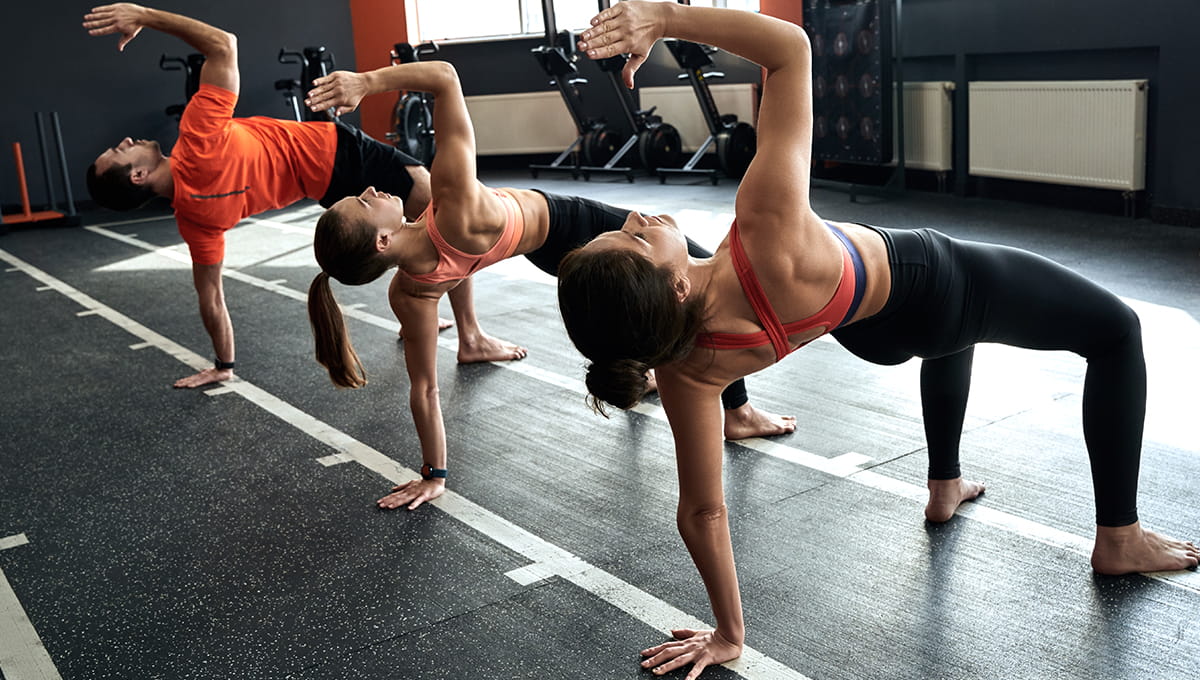
Working out with friends helps you stay consistent because it turns skipping a session into a social cost, not just a personal one, and that kind of accountability beats willpower most nights. One text in the group chat, "you coming tonight?", and the couch loses. Every time.
Bailing on yourself is easy. Nobody's watching, nothing happens and the evening just rolls on. Bailing on a friend who's already getting changed? That's a whole different feeling, and it's exactly the feeling that gets you out the door on the nights your own motivation has clocked off early.
Find Your Fit at Celebrity Fitness!
Reading about training with friends is one thing. Standing in a room that's already buzzing is another. Try a class free and bring someone along.
Already a member? Browse this week's classes
Now, let's not pretend it's all upside, because it isn't. Two people rarely move at the same speed. Someone's always either holding back or getting towed along, and a "quick session" has a sneaky way of becoming forty-five minutes of gossip between sets with barely a rep to show for it. If you've trained with a mate and quietly wondered whether you'd have got more done solo, you weren't imagining it. You probably were.
A class fixes that without either of you having to say a word. The instructor runs the pace, not you, not them, so there's no negotiating who's slacking and no guilt about pushing harder. You walk in together, the music's already loud, and from there the session just carries you. The motivation benefits of group workouts backs this up too. People training in groups stick with it longer than people going solo, and a big part of that is exactly this: the terms are already set. Nobody has to be the one who says slow down.
Scroll the class timetable together and pick something neither of you has ever tried. New format, even footing, nobody's the expert in the room, which honestly makes it more fun, not less. Find a club near you both if you're not training at the same spot yet. And if one of you lives for classes while the other would rather lift in peace some days, that's completely normal, finding the mix that works for you is built for exactly that split.
Your friend isn't a member yet? That's an easy fix.
This is where most "let's train together" plans quietly die. You drag your friend to one free trial class, they love it, and then there's nowhere for them to go. No plan, no follow-up, just vibes that fade by Thursday. FitPass fixes that: pay-as-you-go access so they can keep showing up with you without committing to membership on day one.
Bringing a friend who isn't a member yet?
FitPass lets them try any class at any club, pay-as-you-go, no membership required. Perfect for a first session together.
Not everyone wants an audience, and that's okay too
None of this means training with someone is the only way. Some people train best completely alone with a coach, no chit-chat, no social pull, just focused attention on their own form. Personal training exists for exactly that, and it's not a consolation prize, it's just a different lever for the same result. A friend keeps you honest through presence. A trainer keeps you honest through expertise and a slot you paid for and don't want to waste. Either way, something outside your own willpower is doing the heavy lifting.
Motivation may be what gets you started, but it was never the plan to keep you going. A friend standing in the doorway, or a class that's already buzzing when you walk in, that's the real plan. And that's what actually gets you back tomorrow.
Frequently asked questions
Is working out with friends actually more effective than working out alone?
It depends on what you're optimising for. For consistency, yes, having someone else expecting you cuts down how often you skip. For pure training efficiency in a single session, not always, mismatched pace or too much talking can genuinely slow things down. A class format solves most of that by handing pace control to an instructor instead of either of you.
What if my friend and I have different fitness levels?
A group class is usually the easiest fix. The instructor sets a shared pace and most formats scale up or down within the same room, so nobody's stuck holding back or gasping to keep up.
What if my friend isn't a gym member?
A free trial class covers a one-off visit. If they want to keep training with you regularly without committing to full membership straight away, FitPass gives them pay-as-you-go access to classes and clubs in the meantime.
Can group classes work if my friend prefers training solo?
Yes, and it's more common than people think. Plenty of friend pairs mix it up, classes together for the social, high-energy days, solo or PT sessions separately when one of you wants to lock in alone.