
19 Aug 2026
The Fitness Habit Formula: 5 Ways to Make Exercise Part of Your Week
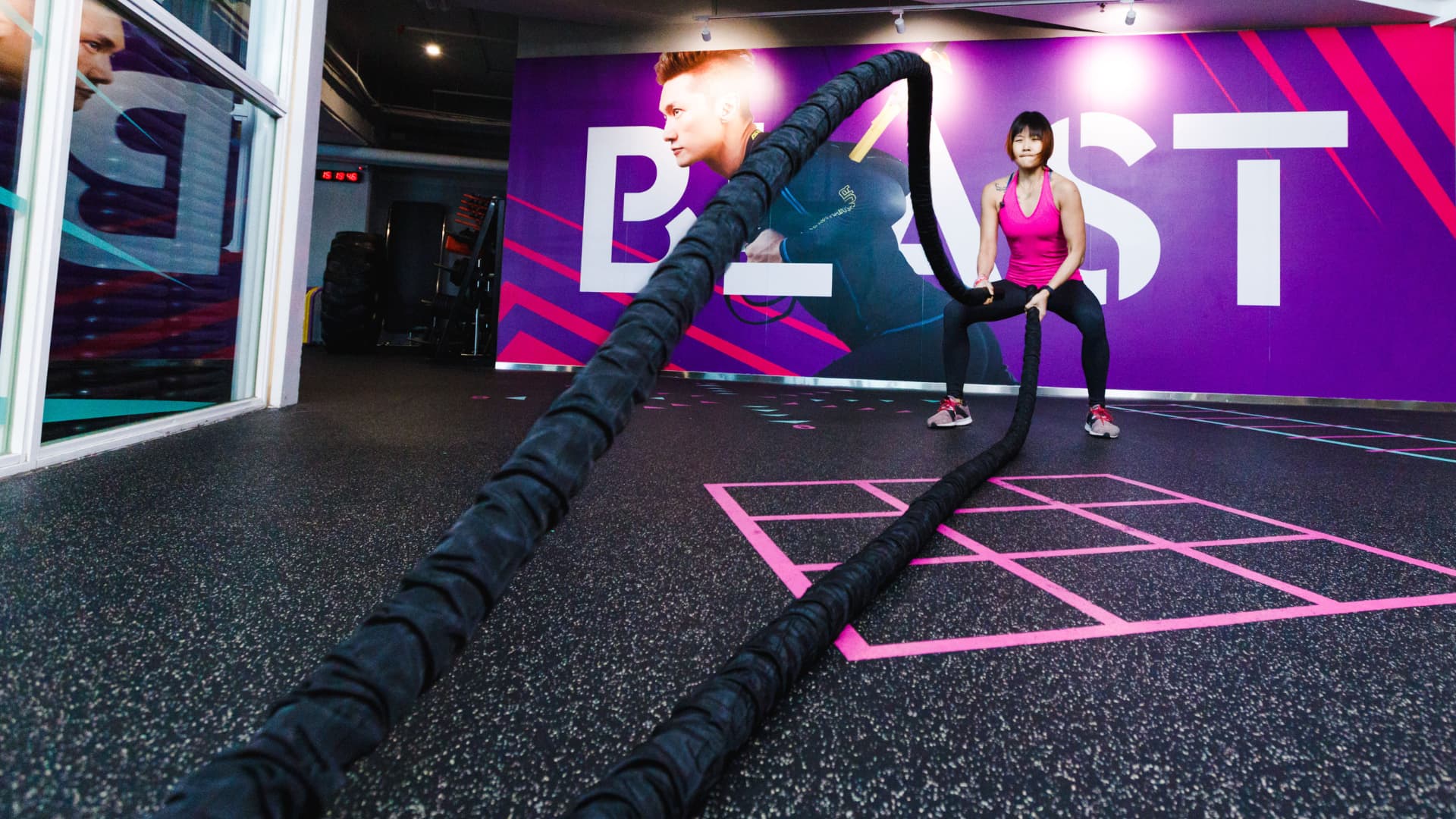
A fitness habit is exercise your brain no longer has to negotiate over. It's built into your week the same way brushing your teeth is, triggered by a cue, run on autopilot, and rewarding enough that you keep coming back without a pep talk. Most people chase motivation instead, and motivation is a spark: loud on Monday morning, gone by a rainy Thursday. A habit doesn't need to be talked into anything. It just happens.
Think about the people you know who never seem to skip a session. It isn't that they love burpees more than you do, or that their week magically has more hours in it. Somewhere along the line, working out stopped being a decision they made and became a thing they simply do, the way you don't decide to check your phone first thing in the morning, you just do. That's the gap between "trying to be consistent" and "being consistent." One takes energy every single day. The other took energy once, to build, and now runs on its own.
Why "just try harder" was always going to fail
Here's the part nobody tells you at the start of a fitness journey: willpower is a terrible long-term strategy. It's a battery that drains all day, every decision and deadline chipping away at it, so by evening there's barely enough left to choose the gym over the couch, let alone push through a hard session. Relying on motivation to show up for a workout is like relying on good weather to water your plants. Sometimes it happens. Often it doesn't, and the plants don't care about your excuses.
Habit formation works differently. Behavioural scientists describe it as a loop: a cue triggers a routine, the routine delivers a reward, and the brain quietly files the whole sequence away as "worth repeating." Do that enough times and the habit runs itself, largely bypassing the willpower battery altogether. That's the fitness habit formula in one sentence: stop trying to want it more, and start engineering the loop.
So here are five ways to build that loop, piece by piece, until exercise stops being a decision and starts being a Tuesday.
1. Stack it onto something you already do
Habit stacking is deceptively simple: attach the new habit to an existing one, so the old habit becomes the cue for the new. You don't build a workout habit from thin air, you bolt it onto a routine your brain already runs without thinking.
Already have coffee running every morning at 7am? That's your cue. "After I finish my coffee, I put on my gym shoes" is a stronger instruction to your brain than "I'll work out sometime today," because it's tied to something that already happens like clockwork. It's why early risers who turn that first coffee into a launch pad rarely miss a session, and the ultimate guide to morning workouts is basically a manual for doing exactly that. Finish work at 6pm sharp most days? That's your cue. The gym bag goes straight into the car that morning, so by 6pm there's no decision left to make, just a next step to follow. Stuck at a desk through the afternoon instead? Lunch break gym workouts turn that one open window into the anchor, without eating into the whole hour.
The trick is picking an anchor that's genuinely unshakeable. Lunch is a fine cue on weekdays but disappears at weekends. A commute works brilliantly until the day you work from home. The most reliable anchors tend to be biological rather than scheduled: waking up, the first coffee, brushing your teeth at night. Pin the habit to one of those and it survives even the weeks your calendar falls apart. This whole cue-based approach works well beyond the gym too, if you're curious, a few simple life hacks for tweaking daily habits takes the same idea further.
The cue does the remembering so you don't have to.
2. Make the cue impossible to miss
Environment shapes behaviour more than intention ever does. Gym clothes laid out the night before get worn. Gym clothes buried in a drawer get postponed. A class booked and confirmed with a reminder on your phone gets attended. A vague "I'll go later today" gets quietly dropped somewhere between lunch and dinner.
Small design choices compound: keep your gym bag by the front door, not the closet. Browse tomorrow's class timetable and book it tonight, not the morning of. Follow an account that reminds you when your favourite instructor is teaching next. None of this requires more motivation. It just removes the friction between you and showing up, and friction is usually the whole problem.
It works in reverse too. If your evenings keep dissolving into a phone scroll instead of a workout, the fix often isn't more discipline, it's making the competing habit slightly harder to fall into. Charge your phone in another room for the hour before your usual session. Put the trainers where the remote used to live. You're not fighting temptation head-on, you're just quietly rearranging the board so the easy choice and the right choice are the same choice.
Find your fit at Celebrity Fitness Malaysia
The easiest cue to design is a class that's already booked. Try one free and give your new habit its first rep.
| ✓ Any class, any vibe | ✓ No card required | ✓ Book in 60 seconds |
Already a member? Check today's class timetable
3. Shrink it until it's stupid easy
Big goals sound inspiring and collapse under their own weight by week two. "I'll train five days a week" is a lot of pressure to put on a habit that doesn't exist yet. Small goals sound almost embarrassing and quietly stick around for years. Start absurdly small: a ten-minute workout counts. Showing up and stretching for five minutes counts. The goal in month one was never the workout itself, it was proving to your own brain that you're the kind of person who shows up, even when the version that shows up is small. That's really the whole argument behind you don't need to be fit to start going to the gym: showing up is the qualification, not fitness level. FitPass is a low-pressure way to test that first small session, one credit at a time, before any bigger commitment enters the picture.
Once that identity sets in, the intensity builds itself. It's far easier to go from ten minutes to forty than from zero to forty, because the hard part was never the forty minutes, it was ever getting through the door in the first place. Fizzled out around week three before? How to keep showing up when motivation disappears covers exactly that stretch of the curve. And if shrinking things down further is the goal, that's the entire premise behind zero-regret gym days.
4. Attach it to people, not just willpower
Solo habits live or die by your own memory and mood on any given day. Social habits get backup. When a class is booked, a friend is expecting you, or an instructor already knows your name, skipping stops being a private decision and starts feeling like standing someone up. That single shift, from "no one will know" to "someone's expecting me", is one of the most reliable habit-formation tools that exists, and it's baked directly into group fitness.
There's real research behind the feeling too: people who train in groups consistently report higher long-term adherence than people training alone, because the environment itself supplies the accountability that willpower keeps failing to. The room does a surprising amount of the heavy lifting here, which the motivation benefits of group workouts gets into in more depth. If solo sessions have been the default so far, group fitness vs solo workouts lays out exactly what changes once you add people to the mix. And for anyone starting from zero, why group fitness is the best starting point for beginners makes the case for classes over going it alone from day one. Classes are where this whole formula comes together fastest, since the cue, the people and the structure all arrive in one booking.
Testing the loop before you commit?
FitPass lets you build the habit first, one credit at a time, across any club or class, before deciding on membership.
5. Reward the win immediately
The brain doesn't file away "this will pay off in six months." It files away "this felt good right now." That's the reward half of the habit loop, and it's the piece most people forget to design on purpose. A post-class smoothie with a friend. A streak tracker that ticks up. Simply noticing, out loud, that you feel sharper walking out than you did walking in works too, and it's the exact lift behind workouts that snap you out of the 4pm slump. None of it needs to be elaborate. It just needs to happen close enough to the workout that your brain connects the two.
Over weeks, those small rewards stack into something bigger: better sleep, steadier energy, a body that moves the way you want it to. But those payoffs arrive slowly, and slow rewards don't build habits on their own. The small, immediate ones are what carry you there, right up until the bigger ones start showing up on their own.
What the research says about exercise habits in Southeast Asia
This isn't just a motivational idea, it shows up clearly in regional data. A 2023 study out of Universiti Malaya surveyed Malaysian adults on their physical activity habits and found that only around 12.8% met health-beneficial exercise guidelines consistently, and just 2.8% of respondents were even aware those guidelines existed in the first place. The gap wasn't a lack of desire to be healthy, it was a lack of structure turning intention into a repeatable habit. Awareness alone was never going to close that gap. A system was always going to do the work motivation couldn't.
Singapore tells a more hopeful version of the same story. National Population Health Survey data cited in a 2022 BMC Public Health study found that the share of Singaporeans engaged in regular exercise rose from 29.4% in 2017 to 35.2% in 2019, a jump researchers linked to population-level habit campaigns like the National Steps Challenge, which pairs a simple daily cue (a step tracker) with a small immediate reward (redeemable incentives). That's the exact formula in this article, just running at national scale. The same study also found that lack of time and fatigue were, by a wide margin, the two most commonly reported barriers to exercise among adults, both of which habit stacking and shrinking the goal are specifically designed to work around.
How long until it actually sticks?
Forget the "21 days" myth, it was never based on solid evidence and it sets people up to feel like a failure at exactly the point they're closest to breaking through. Research on real habit formation puts the average closer to two to three months of consistent repetition before a behaviour starts to feel automatic, and it varies a lot by person and habit. The plateau in week three or four isn't proof the plan failed. It's the middle of the process, not the end of it.
This is exactly why the formula matters more than any single burst of motivation. Stack the cue, shrink the goal, add people, reward the win, repeat, and the habit builds itself somewhere in that two-to-three-month window whether you're feeling inspired that day or not.
What the formula looks like across a real week
Formulas are easier to trust once you can see them in motion, so here's what a first week might actually look like for someone stacking all five pieces at once. Monday, straight after the usual 7am coffee, gym shoes go on and a free trial class gets booked for that evening, small enough that skipping feels almost silly and free enough that there's nothing to lose by trying.
Wednesday, the same cue repeats, this time with a friend tagged into the booking and a FitPass credit covering a different studio altogether, so showing up stops being optional and stops being locked to one format.
By Friday there's no ceremony left to it, the bag's already in the car from the morning, the app reminder pings, and the whole thing runs closer to autopilot than effort. None of those three sessions needed to be impressive. They only needed to happen, on cue, with a small reward waiting on the other side.
Repeat that shape, not the exact schedule, for a few months and the formula stops being something you're following and becomes something you just do.
Put the formula to work this week
You don't need to install all five pieces at once. Pick the one that's been your biggest gap, stack it onto tomorrow morning's coffee, book a class before you can talk yourself out of it, and let the small win do its job. Routine gone stale rather than stopped altogether? Switching up your workout routine is the faster fix. Been away longer than planned? Restarting after a long break eases you back in without the guilt trip. And for anyone who'd rather have the whole thing mapped out from day one instead of piecing it together as they go, how to create a fitness plan that actually works and how to set smart fitness goals cover the planning side of this same formula.
The fastest way in is still a free class. Claim your free trial and find a class that fits your week to give the formula its first rep. Not ready to commit to a membership yet? FitPass lets you keep testing the loop, class by class, club by club, until it's obviously working, then explore membership to make it part of every week from here on.
Frequently asked questions
What is a fitness habit?
A fitness habit is exercise that's become automatic rather than something you have to decide to do each time. It's triggered by a consistent cue, follows a routine you don't have to think through, and is reinforced by a reward, so it runs with minimal reliance on motivation or willpower.
How long does it take to build a fitness habit?
Research suggests it typically takes around two to three months of consistent repetition for a new exercise habit to feel automatic, though this varies by person and by how complex the habit is. The commonly cited "21 days" figure isn't well supported by evidence.
What is habit stacking and how does it help with exercise?
Habit stacking means attaching a new habit to an existing one, using the existing habit as the cue. For example, "after I finish my morning coffee, I put on my gym shoes" borrows the reliability of an established routine to anchor a new one.
Why do group classes help with building a workout habit?
Group classes add social accountability and a fixed schedule, two things that make skipping harder than showing up. When other people or an instructor expect you, the habit gets reinforced by the environment rather than relying on willpower alone.
What's the fastest way to start building an exercise habit?
Start smaller than feels necessary. A short, easy session that you can't talk yourself out of builds consistency faster than an ambitious routine you abandon after two weeks. Once showing up becomes automatic, intensity is easy to add.
Why do so few people in Southeast Asia meet exercise guidelines?
Regional research points to structure, not desire, as the main gap. A Malaysian study found very low awareness of recommended activity guidelines, while Singapore-based research identified lack of time and fatigue as the top reported barriers. Habit-formation strategies like stacking, shrinking the goal and social accountability are specifically designed to work around exactly those barriers.




.jpg)